
Sercotel Granada Suites: the whole hotel fitted with Checkout Buttons in two hours, one minute per room
An aparthotel with limited reception hours that never knew when a guest had left. Now the button updates Opera, alerts housekeeping in their app, posts to the WhatsApp group and switches the climate off.
2h
The entire hotel
1 min
Per room
4
Systems that fire on their own
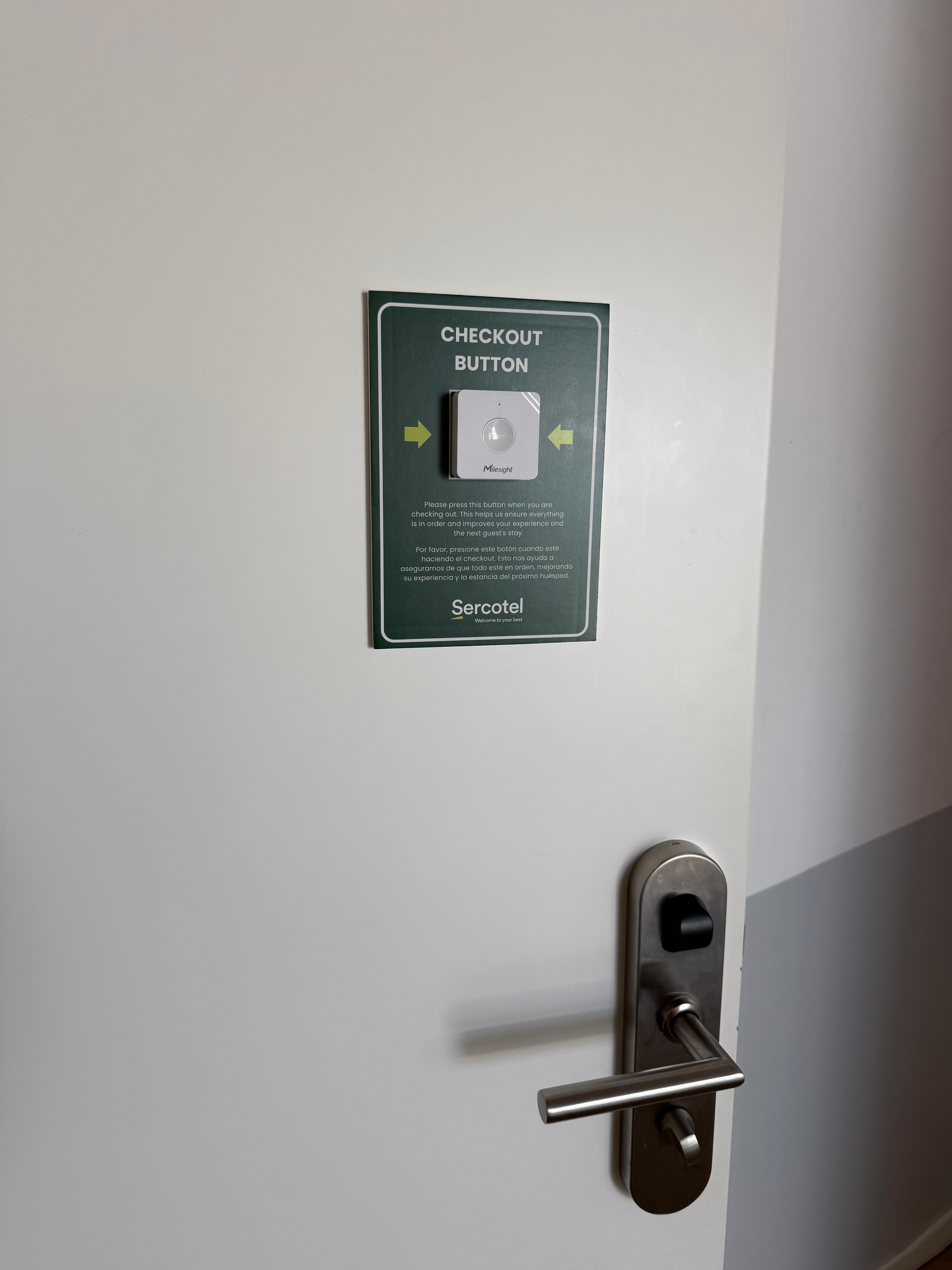
In an aparthotel with limited reception hours, a guest's departure is a piece of information that simply gets lost.
The guest leaves, and from that moment nobody knows for sure. The apartment can be free since nine in the morning and still show as occupied until someone checks. Housekeeping works blind, the PMS lags behind reality, and the climate keeps running for nobody.
Sercotel Granada Suites solved it with a physical button in each of its 28 apartments.
The install: one minute per room
The entire hotel was fitted in two hours, roughly one minute per room.
That figure isn't marketing; it follows directly from how the device works. The button runs on LoRaWAN, a low-power network with a range of hundreds of metres, so it doesn't depend on in-room WiFi and there's nothing to configure inside the unit. You place the button, stand up a gateway for the building, and that's it.
No building work, no cabling, no apartments taken out of service.
What happens when a guest presses it
One press on the way out, and four things fire on their own:
- Opera updates. The PMS marks the apartment vacant without anyone typing it in.
- Housekeeping sees it in their app. The information lands in Thakys, the tool the team already used.
- The alert hits the WhatsApp group. Same channel as always, nothing to install, nothing new to learn.
- The climate switches off. The apartment stops running the moment it empties, not when somebody remembers.
That last line is what connects the two products. The button isn't only a signal for housekeeping: it's also the trigger telling climate control that nobody's in there any more.
Why it matters that alerts land where the team already is
Because that's what decides whether a rollout gets used or quietly abandoned.
Nobody had to ask the housekeeping team to install a new app, or to remember to open it. The information goes to Opera, which they already used, to Thakys, which they already used, and to WhatsApp, which they already used.
Here is what that looks like from the inside: every message in the group is a guest who has just pressed the button on the way out. Look at the times, because that is the whole argument: departures spread out from early morning, well before checkout time.
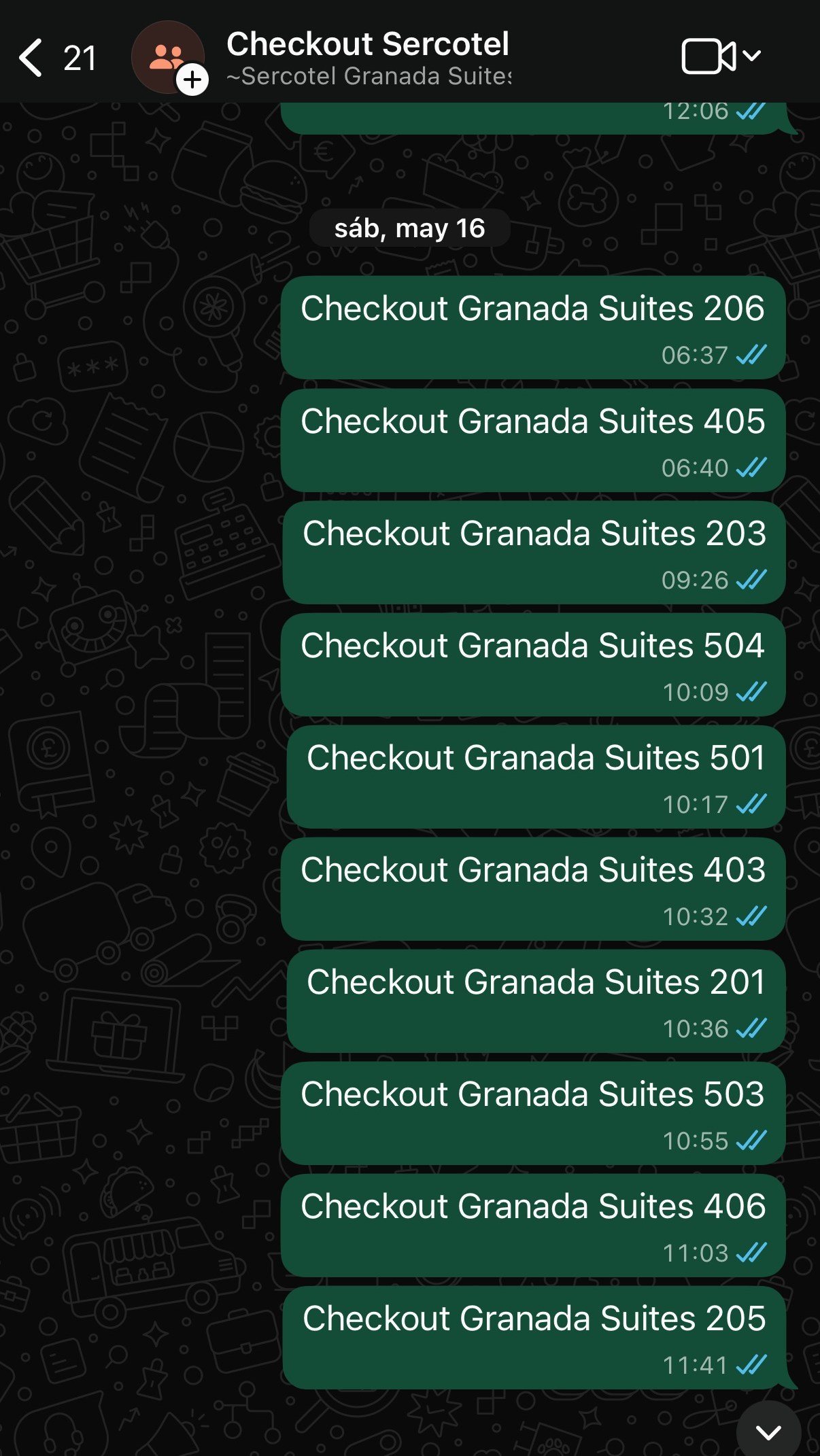
Same logic on the guest side: nobody asks them to install the hotel app to check out. You put a button where they'll see it on the way out.
Why this case matters
Because it sets the floor for effort. Two hours of install, no building work, no apartments blocked and no new tools for the team.
By the end of that morning, the aparthotel knew when each guest was leaving.
Automatic climate control went into the same building. We cover that separately, in this other case study.
More cases
Sercotel Granada Suites: automatic climate control across 28 apartments without opening a single door
An aparthotel with limited reception hours that was heating and cooling empty apartments. The full rollout took under three hours and nobody had to enter a room.

R2R: over 300 properties, eight thermostat brands and not a single new device
One of northern Spain's largest operators had smart thermostats from every brand imaginable, spread across different accounts. Now it all runs automatically, and nothing had to be installed.
Want to be the next one?
Tell us how you operate today and we will tell you what can be automated, how long it takes and what it needs.
Book a call