
Aspasios · The Corner: we got the most out of the installation they already had, and the project cost 40% less
Aspasios wanted every automation in our Automatic Climate in a building with 42 AC units. In the initial audit we found that 18 already had a controller nobody knew how to use. We put them back to work and the project cost 40% less.
-40%
Project cost
18 of 42
Controllers reused
8 min
Installation per unit
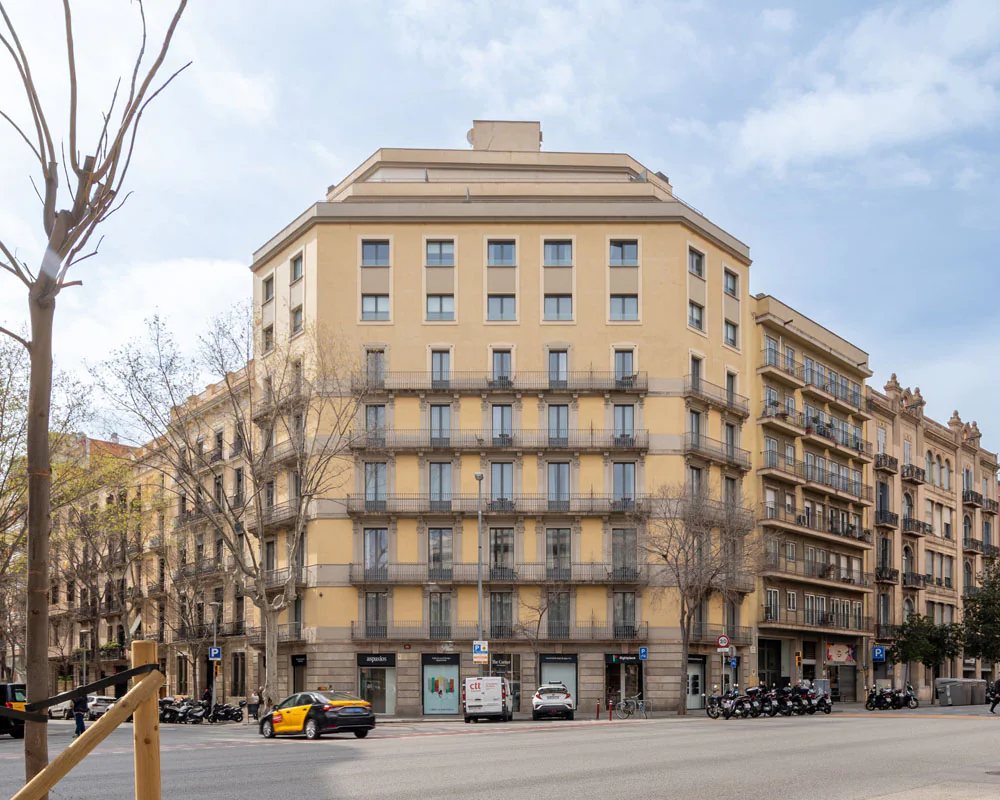
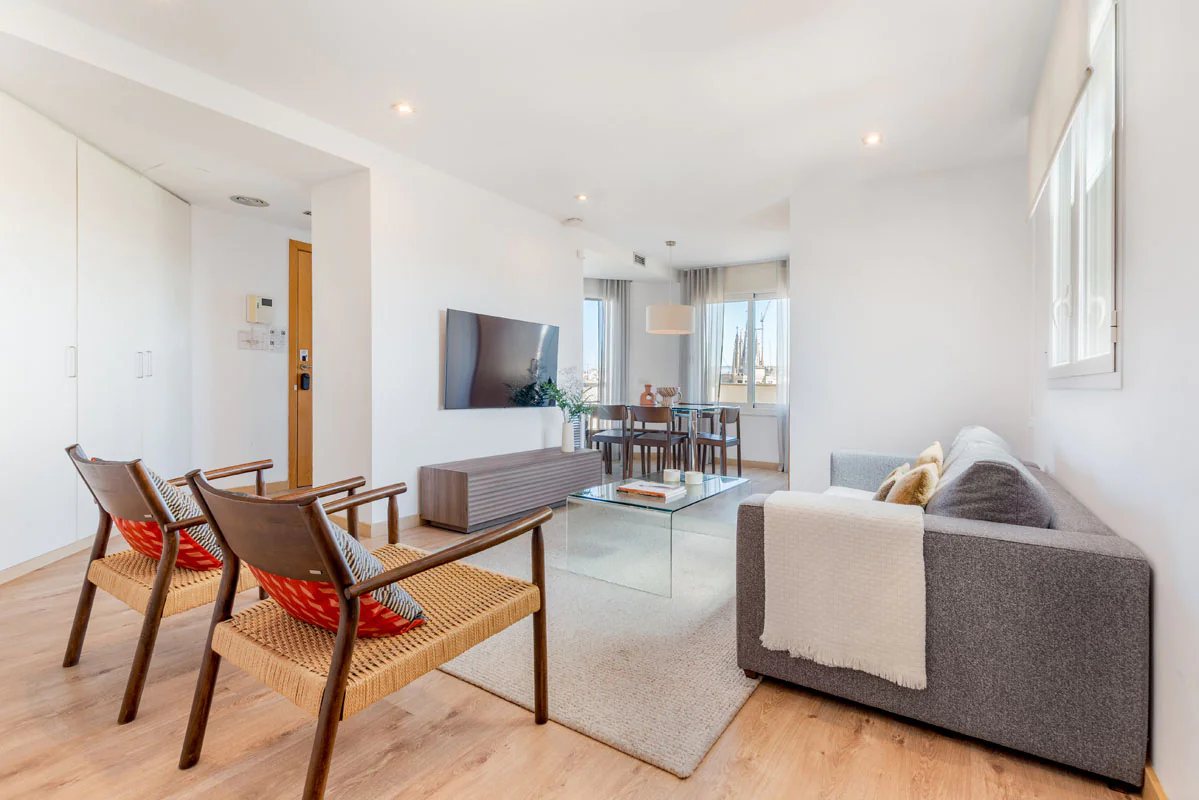
Aspasios runs tourist apartments and boutique hotels in Barcelona, Madrid, Seville, Porto and Lisbon. At The Corner, its nine-storey building in Barcelona, every apartment has ducted Mitsubishi Electric air conditioning hidden in the false ceiling. The building has no reception.
They wanted every automation in our Automatic Climate: each apartment brought to temperature according to its booking, the AC switching off on its own when nobody is there, and the maintenance team able to see and fix any problem without having to go to the building.
For that, each of the building's 42 AC units needed a controller connected to the platform.
Audit first
Before any installation, we sat down with the client and explained how we work: the first step is always a diagnosis and an audit of the systems already installed.
During that audit we realised that 18 of the 42 units already had a controller installed.
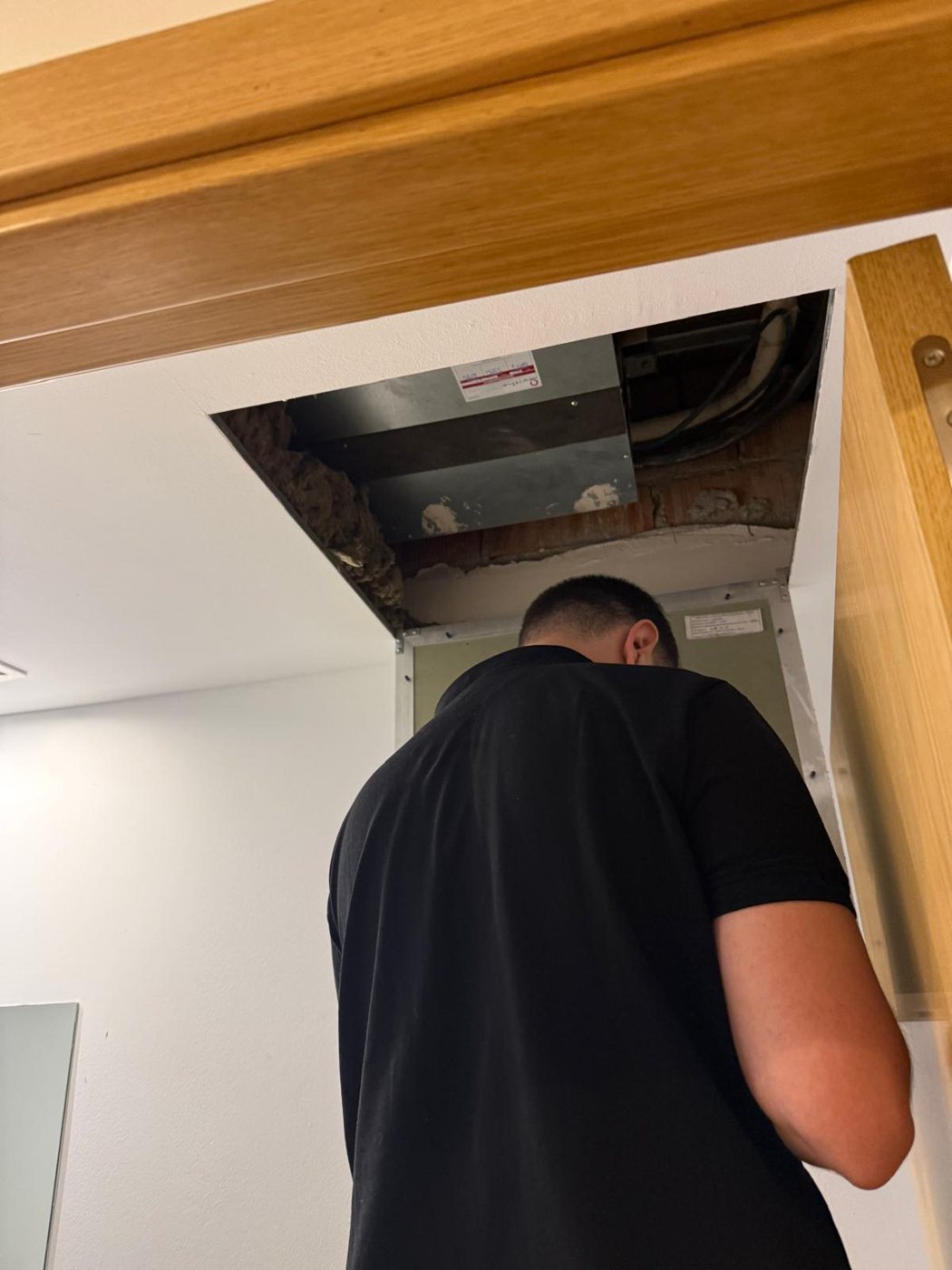 Audit at The Corner: checking the ducted unit in the false ceiling.
Nobody in the building knew how to use them or what they were for. No documentation, no passwords, no access to any app. According to the Aspasios team, they were left over from the building's previous life.
We looked into it and found they were old Intesis controllers, designed to be run from the manufacturer's app with an account nobody had. That is the one in the photo: a white box wired to the unit's board, hidden in the false ceiling.
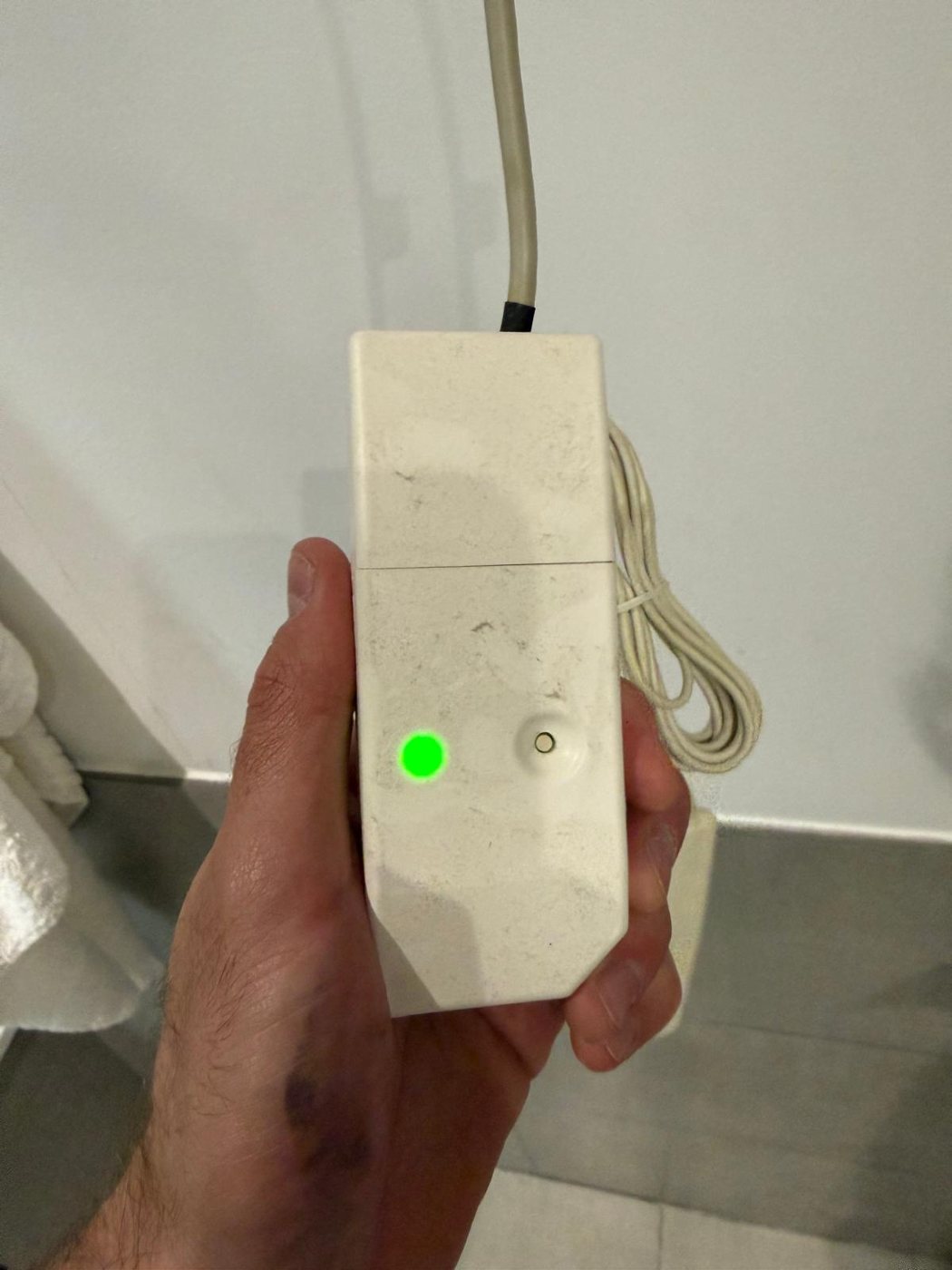 The old controller: an Intesis sitting in the false ceiling that nobody knew how to use. Today it is connected to our Automatic Climate.
Getting an old controller to talk
Instead of writing them off, we built the connection to each one directly over the building's network, using its own protocol, without going through the manufacturer's app or cloud.
We tested them one by one, in both directions:
- Reading the unit's actual state: whether it is on, which mode it is in, its setpoint and the temperature in the room.
- Sending it commands: switching it on and off, changing the mode, the setpoint and the fan.
They responded to everything. From then on, those 18 controllers joined the platform just like any new device.
A very fast installation
The units that had nothing got a new controller, about 8 minutes per unit. Some apartments have more than one, and we never spent more than 20 minutes in any of them. No building work and no apartment taken out of service.
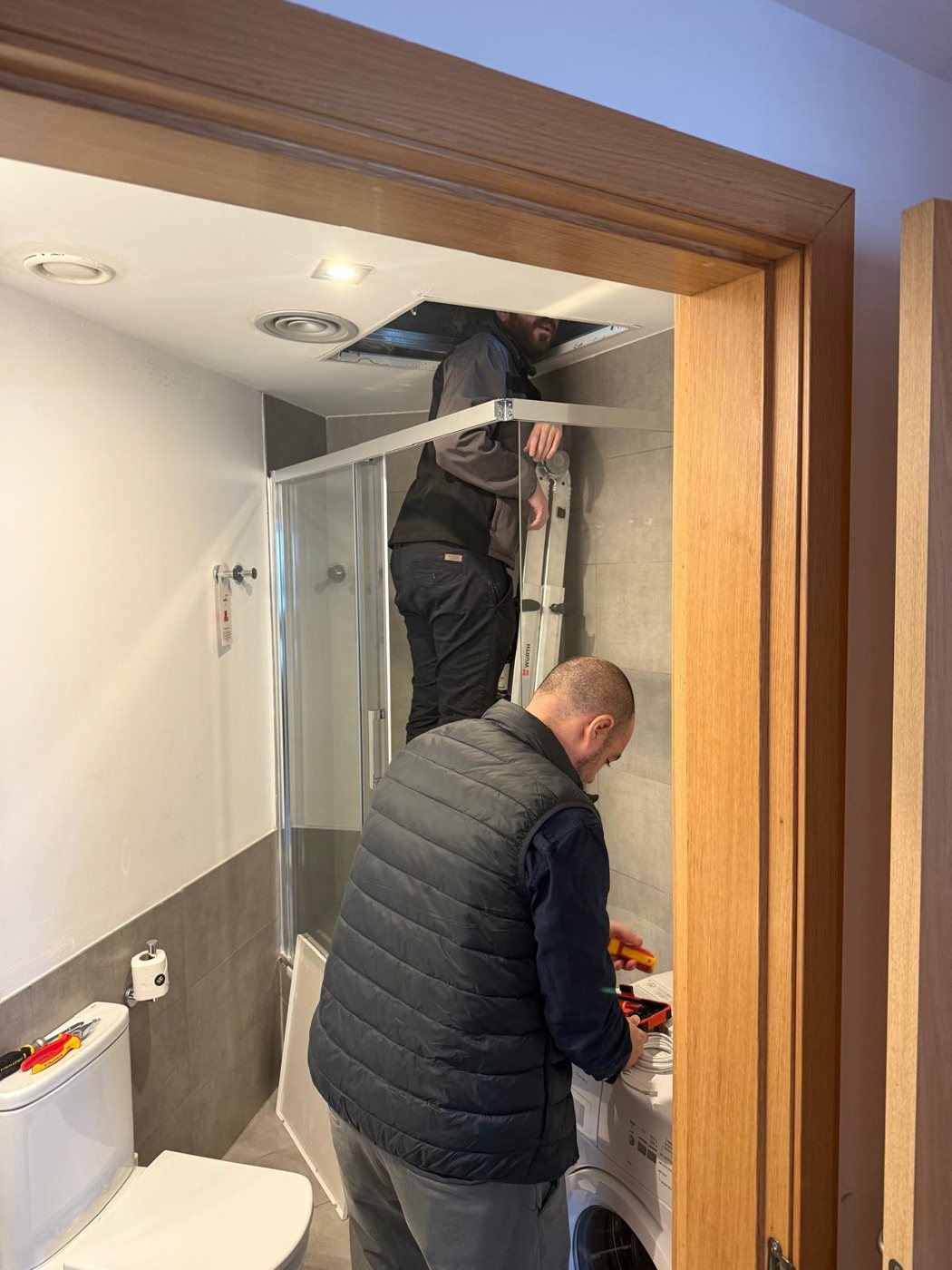 Installing a new controller: about 8 minutes per unit.
It is the same approach as in Aspasios' other building in Barcelona, where we installed the Checkout Button in 11 apartments in under an hour.
One dashboard for the whole building
Our platform is very versatile: it integrates with dozens of controller brands and types, and with every kind of climate system: wall-mounted and ducted splits, VRF, VRV, fan coils, thermostats and radiators.
The Aspasios team runs all 42 units in the building from one place, without needing to know which ones are new and which were already there.
It is not the first time we have made use of what was already installed: we also did it at R2R, Urban Hosts and Sercotel Granada Suites.
40% lower cost
Reusing 18 of the 42 controllers cut the project cost by 40%.
It saved time too: 43% fewer installations in the false ceiling, which is the slow part of any climate job in a building with guests.
What the climate does on its own now
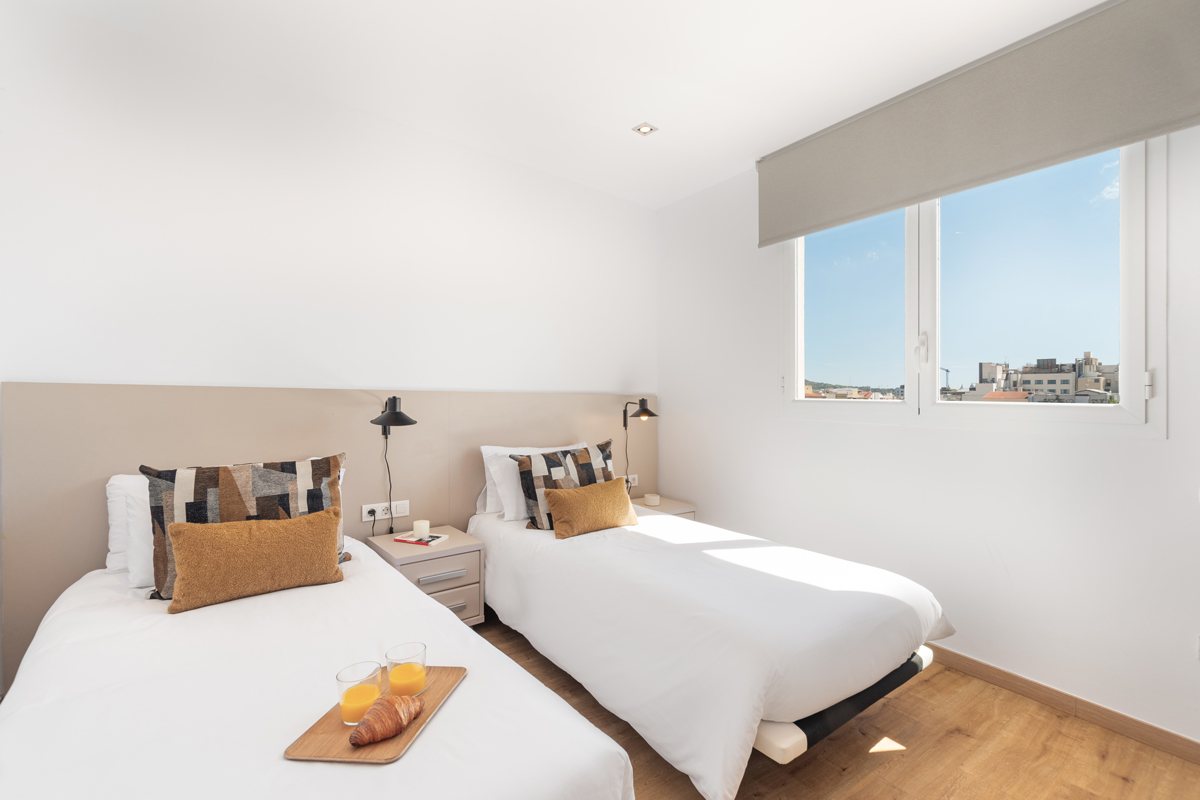
Everything is tied to the actual booking, not to a fixed schedule:
- Pre-conditioning before check-in. The apartment reaches temperature before the guest arrives.
- Off at checkout. As soon as the stay ends, the unit stops using energy.
- Off when there is no booking. If someone leaves the AC on in an empty apartment, it switches itself off after half an hour.
- Temperature limits. They cut out the extremes without the guest feeling a locked thermostat.
- Daily reset. Every day the unit goes back to the settings the operator chooses.
And when a "the AC isn't working" report comes in, the maintenance team logs into the platform and sees what is happening in real time, without having to go to the building.
These are the same automations already running in other buildings, with measured results:
- At Ona Alanda, in Marbella, the air conditioning used 22% less from August to October 2026.
- At Numa Granada Vega, complaints about the air conditioning fell 33% in the hottest summer on record in Granada.
- At Sercotel Granada Suites we avoided 1,338 hours of AC running in August and September, by switching it off at checkout and when there is no booking.
Why the audit comes first
Many buildings already have something installed: a few controllers, a gateway, a system someone left half-finished. That is why, before quoting for new equipment, we look at what is there and what can be reused.
At The Corner, 18 controllers forgotten in the false ceiling are now part of the system that runs the building's climate.
More cases
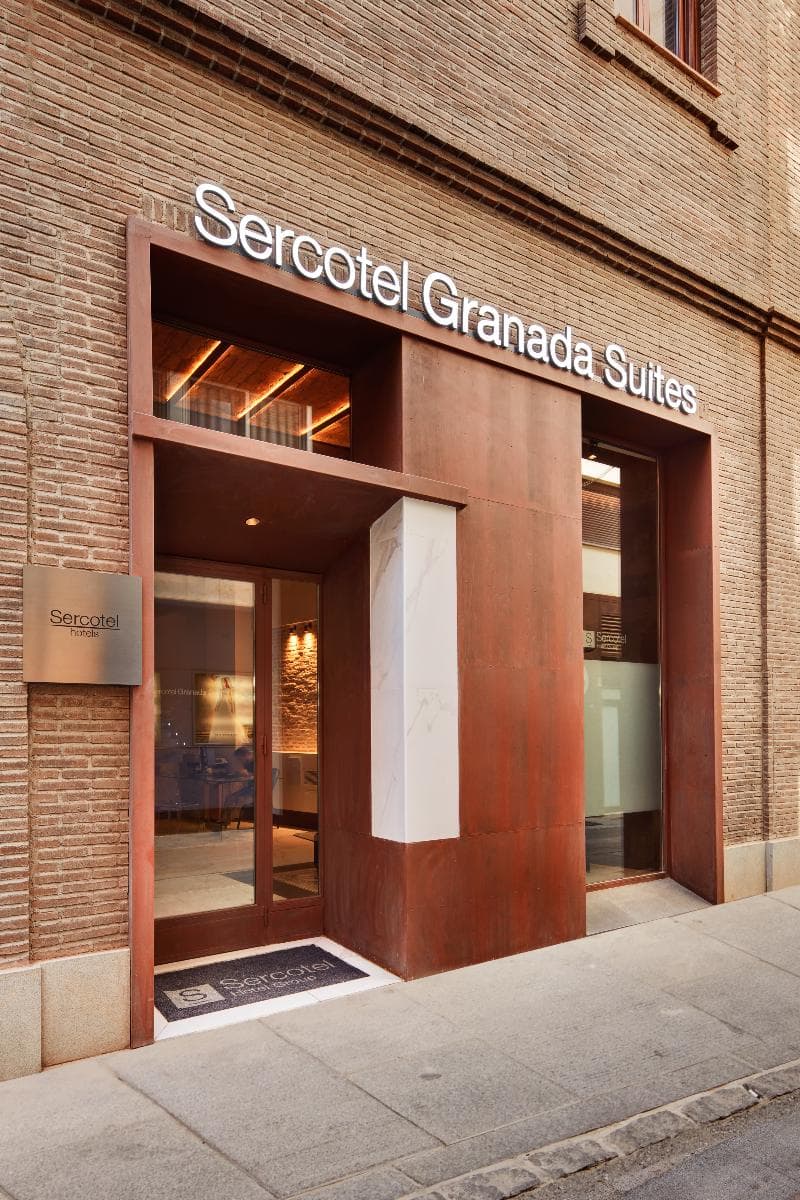

Sercotel Granada Suites: automatic climate control across 28 apartments without opening a single door
An aparthotel with limited reception hours that was heating and cooling empty apartments. The full rollout took under three hours and nobody had to enter a room.
28
Apartments
< 3h
Full installation
0
Doors opened

R2R: over 300 properties, eight thermostat brands and not a single new device
One of northern Spain's largest operators had smart thermostats from every brand imaginable, spread across different accounts. Now it all runs automatically, and nothing had to be installed.
+300
Properties
8
Thermostat brands
< 24h
From zero to live

Urban Hosts: automating climate control in the Basque Country without touching the existing setup
One of the Basque Country's largest operators had thermostats scattered across a wide territory. Everything was automated on top of what was already there, over iCal, in under 24 hours.
< 24h
From zero to live
0
Devices installed
iCal
Booking integration
Numa Granada Vega: fewer air conditioning complaints in Granada's hottest summer on record
With room climate automated and no building work, negative mentions of air conditioning fell by 33% in summer 2026. On the floor analysed, 93% of mentions of air conditioning and heating were positive.
93%
Positive mentions of the AC
33% fewer
Negative mentions of climate
44.5 °C
Summer peak in Granada

Ona Alanda: 22% less air conditioning in Marbella, without anyone going up to the room
With the apartments' air conditioning connected to Automatic Climate, they used 22% less air conditioning from August to October 2026. Per booked night, 31% less air conditioning. No building work, and guests keep control of the temperature.
22%
Less air conditioning
31%
Less AC per booked night
4 times
Fewer hours with the unit at full power
Sercotel Granada Suites: 1,338 fewer hours of AC running in empty apartments, over two summer months
In August and September 2026, our Automatic Climate switched off AC units left running in empty apartments 95 times. After each switch-off, the AC stayed off for a median of 10 hours. In total, 1,338 fewer hours of AC running.
1,338 h
Of AC running avoided
95
Automatic switch-offs
10 h
Median per switch-off
Sercotel Granada Suites: the whole hotel fitted with Checkout Buttons in two hours, one minute per room
An aparthotel with limited reception hours that never knew when a guest had left. Now the button updates Opera, alerts housekeeping in their app, posts to the WhatsApp group and switches the climate off.
2h
The entire hotel
1 min
Per room
4
Systems that fire on their own

Aspasios: an 11-apartment building installed in under an hour
Aspasios did not know when a guest had left until someone went to check. Now departures show up the moment they happen, and the information flows into Mews on its own.
11
Apartments
< 1h
Whole building installed
Mews
Integrated with their PMS

Apolo Homes: the alerts arrive on WhatsApp, the channel the team already used
Apolo Homes did not have to install an app or switch tools. The alert that the guest has left, and the one saying housekeeping is done, land in the same group as always.
2
Alerts per cycle
No new tool
0
Apps to learn
Want to be the next one?
Tell us how you operate today and we will tell you what can be automated, how long it takes and what it needs.
Book a call